We Scanned Thailand's Two Biggest Marketplaces
Marketplace sellers in Thailand often ask us the same question: can SellerReady optimise my Shopee or Lazada store?
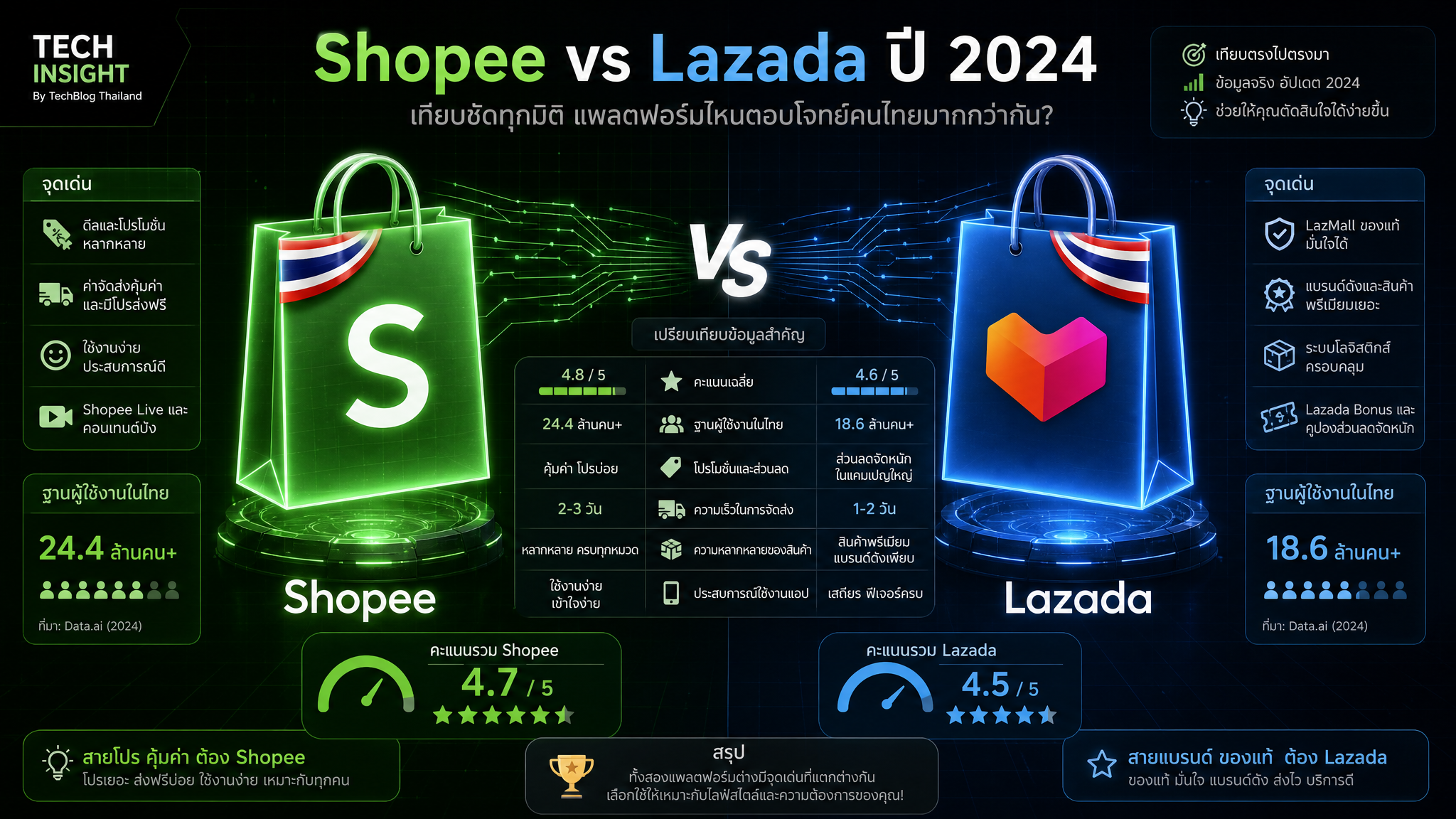
The honest answer is: only partly. Marketplaces control the technical infrastructure - structured data, checkout flow, and protocol support are managed by the platform, not the individual seller. But some marketplaces are investing more in the agent-commerce layer than others. We ran the SellerReady AI Readiness Scanner on both to find out which is ahead.
| Dimension | Shopee JBL Official Store | Lazada Thailand Super Shop |
|---|---|---|
| Overall Score | 58 / Grade C | 46 / Grade C |
| Discovery & Access | 44 / C | 60 / B |
| Structured Data | 38 / D | 40 / C |
| Product Data | 62 / B | 20 / D |
| Protocol Support | 64 / B | 30 / D |
| Security & Trust | 75 / B | 85 / A |
| Technical Performance | 82 / A | 50 / C |
| Payment Readiness | 53 / C | 55 / C |
Where Shopee Wins
Product Data (62 vs 20)
Shopee exposes significantly richer product information. Complete product listings, identifiers, and stock availability signals are all present. For AI agents trying to compare products across sellers, this matters. Lazada's product data layer is thinner - incomplete listings, missing identifiers, and no stock signals detected.
Protocol Support (64 vs 30)
This is the most surprising finding. Shopee actually has UCP and ACP protocol signals detected - the same protocols Google and Stripe are pushing for agentic commerce. Lazada has none. This suggests Shopee is actively building infrastructure for AI-agent shopping, while Lazada is not yet investing in this layer.
Technical Performance (82 vs 50)
Shopee is server-side rendered, fast, and uses semantic HTML. Lazada is client-side rendered with a slower server response and poor HTML semantics. AI agents parse HTML directly. A slow, JS-dependent site is harder for an agent to read accurately.
Where Lazada Wins
Security & Trust (85 vs 75)
Lazada edges ahead on security headers and HTTPS enforcement. Both are solid, but Lazada's security posture is marginally stronger.
Discovery & Access (60 vs 44)
Lazada has a proper XML sitemap with product URLs. Shopee's sitemap is weaker, and neither platform has an llms.txt file for AI discovery.
What This Means for Marketplace Sellers
You cannot control the platform. As a seller on Shopee or Lazada, you cannot add structured data, fix protocol support, or change payment rails. That is on the marketplace.
But you can choose the platform. If agentic commerce becomes a meaningful traffic source - and ARK Invest says it will be 25% of online spending by 2030 - Shopee is clearly investing more in the infrastructure to support it.
For full control, move to Shopify or WooCommerce. Self-hosted stores let you optimise every dimension the scanner checks: structured data, protocol endpoints, checkout flow, and payment readiness. That is why our Setup Service focuses on Shopify and WooCommerce - those are the platforms where our work actually moves the needle.
The Bottom Line
Shopee is ahead of Lazada in agent readiness. Not by a small margin - by 12 points, with clear advantages in product data, protocol support, and technical performance. For Thai marketplace sellers thinking about the next 3-5 years, this is worth factoring into platform strategy.
If you are serious about being found and bought by AI agents, the path is clear: either sell on the marketplace that is investing in agent infrastructure, or own your store on a platform you can fully optimise.
How to Test Your Own Store
Marketplace sellers on Shopee or Lazada have limited control - but if you run a Shopify or WooCommerce store, you can optimise every dimension. Run the SellerReady AI Readiness Scanner to see exactly where your store stands, and our Setup Service can fix it for you from $297.
Related Reading
Related Topics
Find this useful?
Share it with your team or scan your own store.